
How to install Portainer in Docker Desktop? In this tutorial, you will learn how to install Portainer Extension on Docker Desktop. Docker Desktop is a tool that facilitates the process of building, testing, and deploying local applications using Docker containers by providing developers with a user-friendly graphical interface for managing Docker images and containers on both Linux, Windows and Mac machines. Portainer on the other hand is an opensource container management platform that offers a user-friendly graphical interface for effectively managing Docker containers, images, networks, and volumes.
Table of Contents
Installing Portainer Extension on Docker Desktop
Portainer can be installed and configured on top of Docker Desktop, allowing you to access and manage your local or remote Docker environments from within the Portainer interface.
Install Docker Desktop
How to Install Docker Desktop on Ubuntu 22.04/Ubuntu 20.04
How to Install Docker Desktop on Kali Linux
Install Portainer Extension
Once you have Docker Desktop installed, you can now proceed to install Portainer extension.
From the Extensions menu, click Add Extensions and search for Portainer extension.
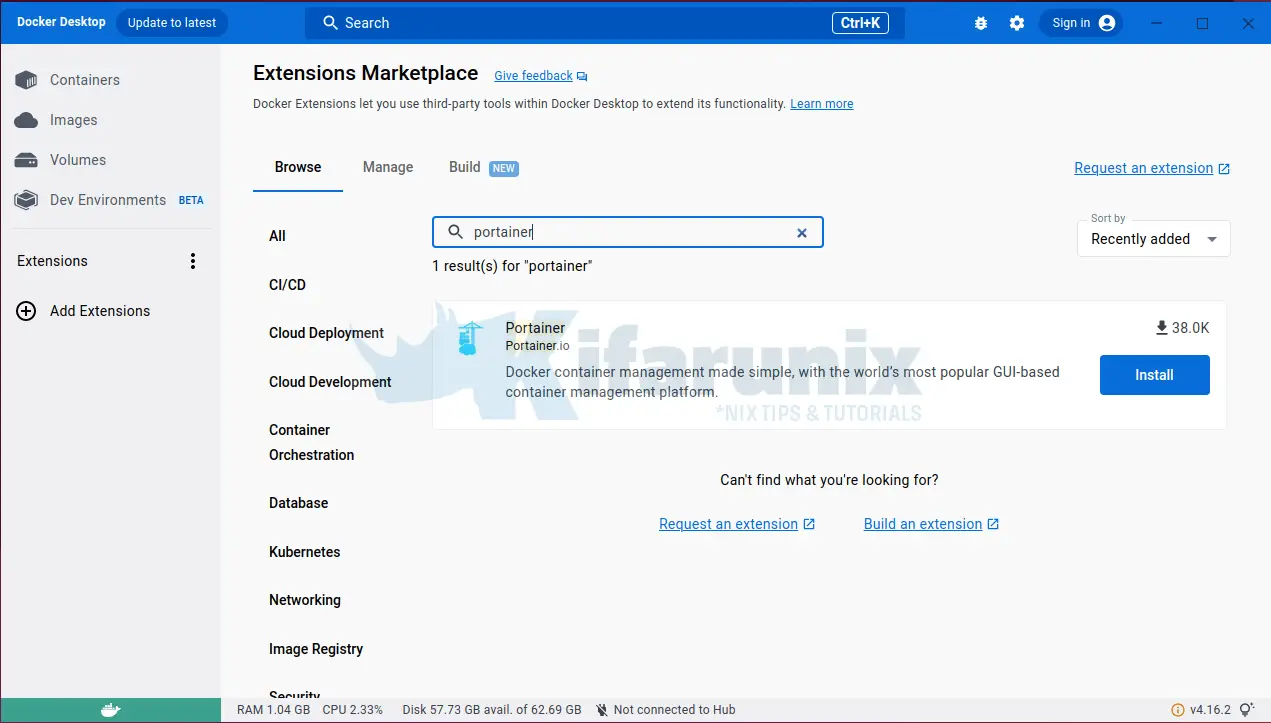
Next, click Install button against the Portainer extension.
The installation command will pull Portainer extension image from the registry for creating the extension.
Launch Portainer on Docker Desktop
Once the installation completes, click Open to launch the Portainer on Docker desktop. You should also see the extension added under Extensions menu.
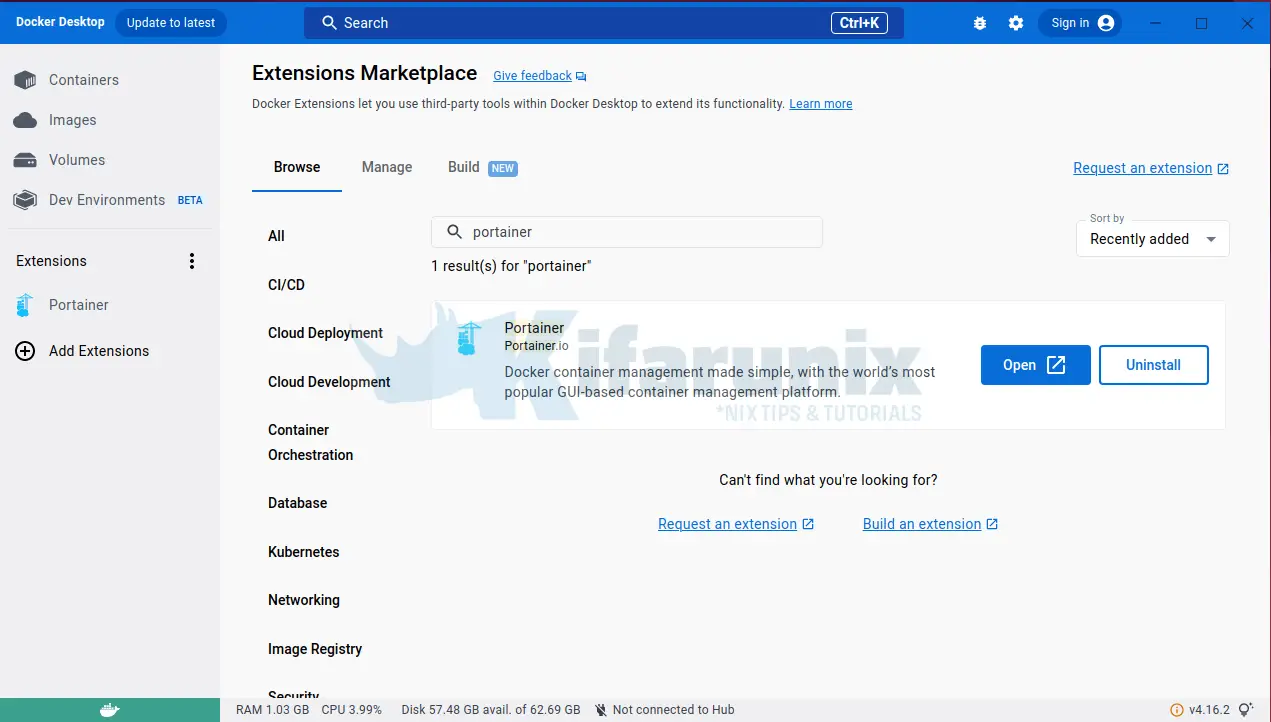
Connect to Docker Environment on Docker Desktop Portainer
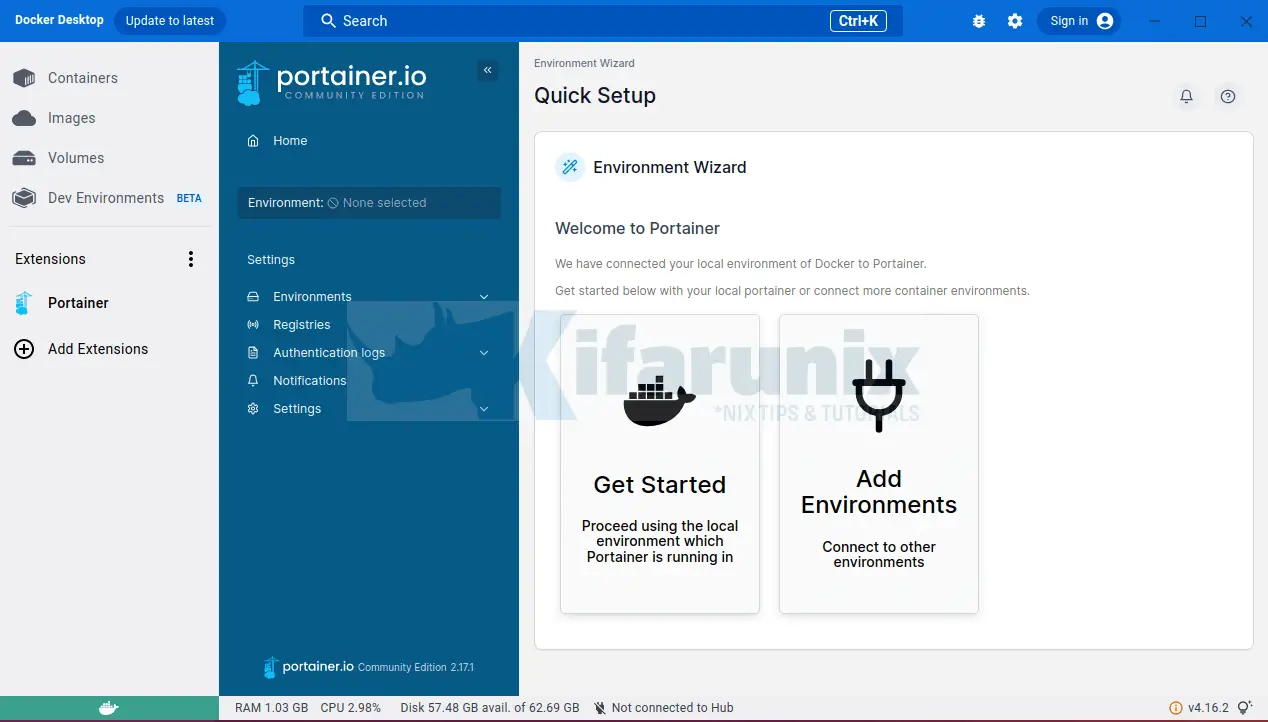
By default, the Portainer extension is connected to your local Docker environment.
Thus, to manage your local Docker environment with Portainer, click Get started.
From the environments, you can see just the local Docker environment.
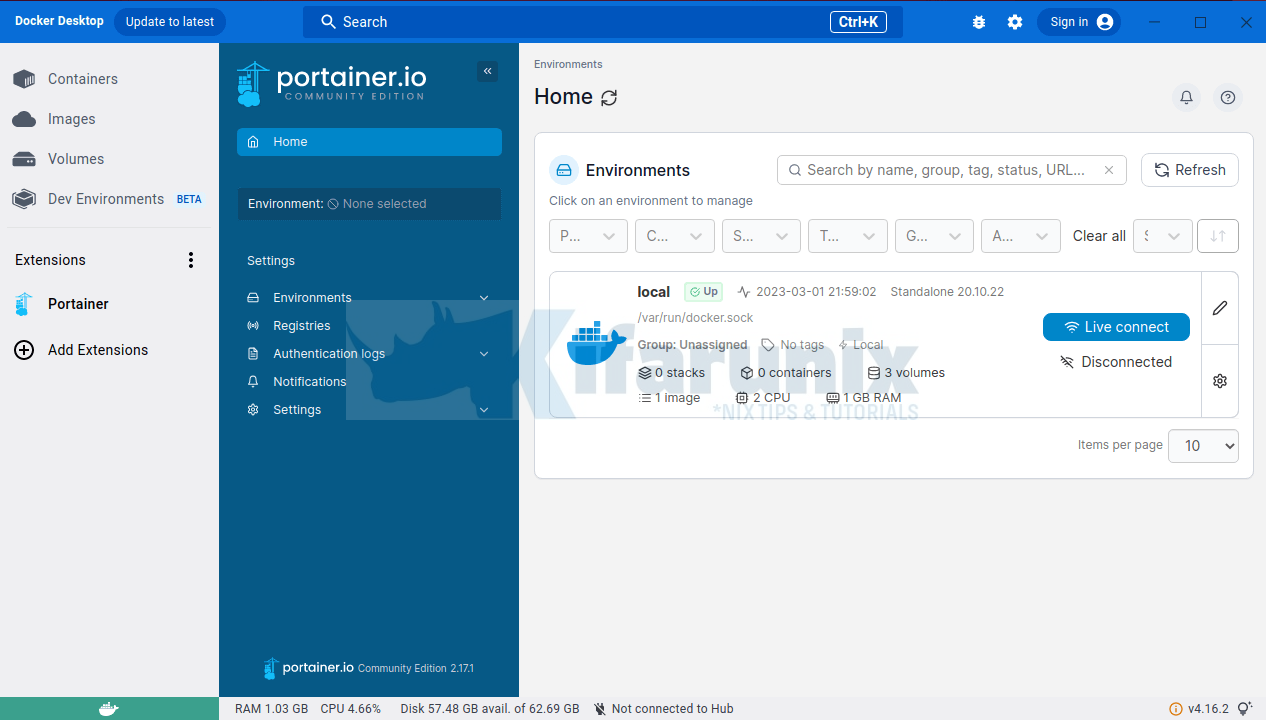
To connect to the Docker environment to manage the containers, click Live Connect.
You should now see local Docker environment Dashboard.
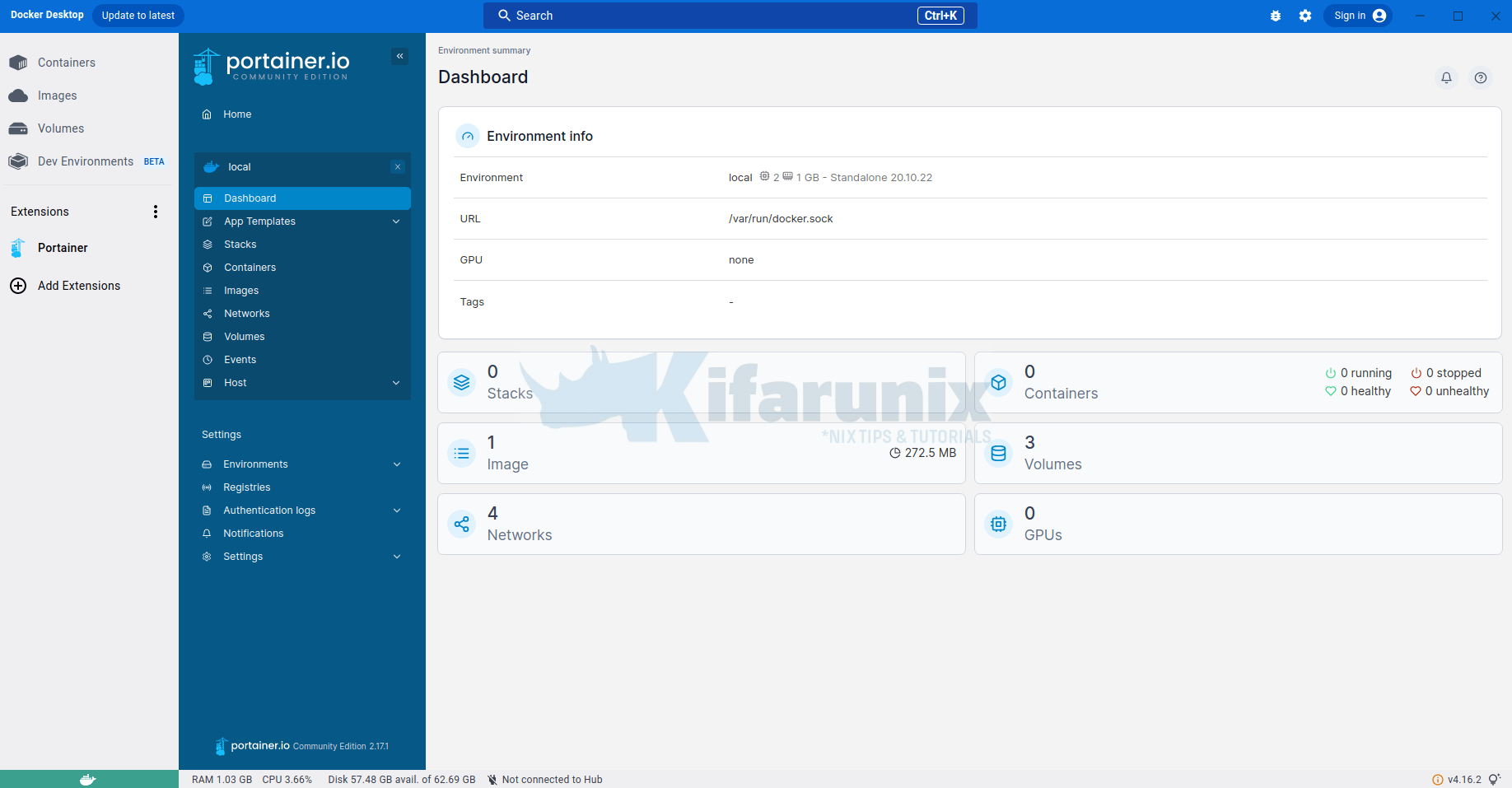
You can now be able to manage your local Docker environment from within Portainer extension on Docker Desktop.
And that is on installing Portainer Extension on Docker Desktop.
Read more on Docker Extensions.


This guide assumes you already have Docker Desktop up and running smoothly, but that’s actually a non-trivial prerequisite on Linux — the installation steps differ quite a bit from Windows or Mac. Worth noting that some users might need to sort out dependencies or GPU passthrough issues first. Anyway, I found that taking a quick personality-style quiz can sometimes be a surprisingly fun way to take a mental break between troubleshooting sessions.
Ran into this exact scenario at work last month — our team was debating whether to manage containers via CLI or a visual interface. Half the folks were comfortable with terminal commands, the other half needed something more intuitive to read the situation quickly. Installing the extension through Docker Desktop’s marketplace ended up being the smoothest path; no extra config, containers showed up immediately in the dashboard. Honestly a solid middle ground for mixed-skill teams.
Funny how this tutorial reminded me of something completely unrelated — I’d just been playing around with one of those AI-generated personality profile cards, the kind that builds a visual snapshot of who you are based on a few inputs. The parallel hit me: both are really about taking something abstract (your containers, your personality type) and giving it a clean, visual interface anyone can navigate without digging through raw data. The extension install was painless once I stopped second-guessing the resource limits.
The part about enabling the Extensions feature in Docker Desktop settings before anything else is actually crucial — I skipped that step the first time and spent a good 20 minutes wondering why the marketplace wasn’t showing up. Also slightly off-topic, but while troubleshooting I ended up doing a quick personality type quiz just to decompress, haha. Anyway, once I toggled that setting, the rest of the install was pretty painless.
Last winter I was setting up a home lab on an old laptop during a long flight layover, and the lack of a GUI made container management genuinely painful. Once I landed and got stable internet, I followed a walkthrough similar to this one and had the extension running within minutes. The whole process reminded me of how browser-based tools have lowered the barrier for complex tasks — I’d been killing time at the gate with an online basketball drafting game that lets you assemble all-time lineups and simulate a full season, zero install needed. Same idea: powerful logic, dead-simple access. Anyway, the step covering the marketplace search was exactly what I’d been missing in other guides.
One thing worth mentioning — this approach works smoothly on Windows, but on older Mac hardware with Rosetta emulation enabled, the extension install sometimes stalls at the verification step. Took me a while to figure out that disabling Rosetta first resolved it. Might be useful to add that as a prerequisite for users on that setup, since not everyone checks the underlying wiki for reference before diving in.
Funny how managing containers visually reminded me of tracking cascading events in complex systems — once you have a proper dashboard, patterns you’d never noticed suddenly become obvious. I actually stumbled onto a similar realization while browsing a community wiki that documents layered mechanics, where contributors map out interconnected triggers much like how Portainer maps service dependencies. The mental model transfers surprisingly well.